Cape Horn Engineering have run thousands of simulations in the quest of designing the perfect Formula Kite Hydrofoil for the Paris 2024 Olympic Games. Hydrofoils registered as official equipment for the Games. More to come…
YACHT RACING
DESIGN
Yacht Racing Design at Cape Horn Engineering
- Cape Horn Engineering pioneered RANSE-based CFD for yacht racing design and still pushes the boundaries daily
- Proven in America’s Cup and three Volvo Ocean Race “Around the World” victories
- Our yacht hull optimisation CFD expertise now powers racing yachts, foiling vessels, commercial ships, SOVs, cruise ships and unconventional designs
- Results: higher speed, better comfort & safety, lower fuel use and reduced emissions
- Led by Dr.-Ing. Rodrigo Azcueta with 15+ years at the heart of winning campaigns
As marine CFD specialists we turn that cutting-edge technology into real competitive advantage in yacht racing design. Because of our proven expertise in the America’s Cup, Volvo Ocean Race and other high-profile sporting events, we apply the same world-class yacht hull optimisation CFD to a wide variety of marine applications from racing yachts and fully-foiling vessels to commercial cargo ships, service operation vessels, cruise ships, work boats and advanced designs.
Why our yacht racing design service stands out
Our specialist CFD technology sits at the forefront of new design solutions that enhance energy efficiency across the entire shipping industry. We deliver clear, actionable insights that naval architects and yacht designers can use immediately.
Dr.-Ing. Rodrigo Azcueta has been at the core of simulation-based America’s Cup and Volvo Ocean Race design campaigns for more than 15 years, always pushing the boundaries of what’s possible. Our designs and engineering solutions have directly helped three sailing teams win the famous “Around the World” Volvo Ocean Race. As Head of hydrodynamic CFD for four America’s Cup Challenges we have built our reputation on a genuine racing pedigree and a proven winning formula.
- 2005–2006 Volvo Ocean Race – ABN Amro (winner)
- 2008–2009 Volvo Ocean Race – Ericsson Racing Team (winner)
- 2011–2012 Volvo Ocean Race – Groupama Sailing Team (winner)
- 2003–2007 America’s Cup – BMW Oracle Racing
- 2008–2009 America’s Cup – Team Origin
- 2010–2013 America’s Cup – Artemis Racing
- 2014–2017 America’s Cup – Land Rover BAR
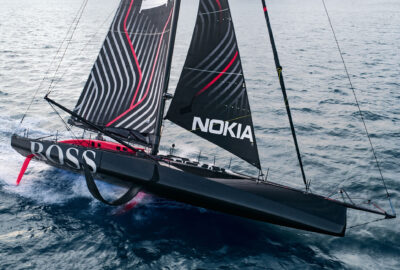
After our successful involvement in the design of the foils of the previous HUGO BOSS, without doubt the fastest boat in the fleet during Vendee Globe 2016-2017, we were proudly commissioned again by Alex Thomson Racing to assist in the design of the new foil system for the next generation IMOCA Open60 HUGO BOSS, for Vendee Globe 2020-2021.
How our CFD technology can help you win races
- Running simulations to help design the sails, hull and appendages of your boats
- Running Velocity Prediction Programs to assess the yacht performance and optimising your design for a given handicap system
- Using state-of-the-art optimisation methods and algorithms to come up with the best design for a given condition or multiple conditions in yacht racing
- Obtaining accurate load cases for reliability or for designing structures to the edge when it matters
What are the main features of our simulations?
- We use the best CFD package on the market, STAR-CCM+ from Siemens Digital Industries. We never compromise on the tools we choose.
- Our workflow is highly automated, allowing us to run hundreds of simulations per day.
- We have access to large HPC clusters and large amounts of software licences.
- Full-scale hydrodynamic simulations include all appendages, free-surface deformation, dynamic sailing attitude, and complex phenomena such as laminar/turbulent transition, cavitation, ventilation and sprays.
- 6-DOF hydrodynamic simulations that fully balance the yacht with aerodynamic forces for true yacht hull optimisation CFD.
- We simulate yacht motions in incoming waves from any direction, including surfing down a wave and even capsize events.
- There is no restriction on motion amplitude.
- Aerodynamic simulations in steady or transient flow, fully coupled to FEA for realistic sail deformation.
- Fluid-Structure Interaction for lifting foils and other structures.
- Slamming loads, sloshing, water entry, wave piercing, water on deck and all associated dynamic phenomena.
- Years of verification and validation against model testing in towing tanks and wind tunnels, the foundation of trusted yacht racing design results.
Areas where we can help...
- VPP and Polar curve
- Hull and appendages performance and optimisation
- Yaw balance, appendage torques and bending moments, load cases
- Seakeeping, added drag, motions and accelerations, slamming loads
- Sail design and sail coefficients
- Windage of hull, deck and rigging
- Cavitation on hydrofoils
- 2D foil section optimisation, laminar sections free of cavitation
- Fluid Structure Interaction of foils and sails
- Design optimisation for a given handicap system
- Detailed flow visualisation and load distribution on appendages
We can deliver a real competitive edge
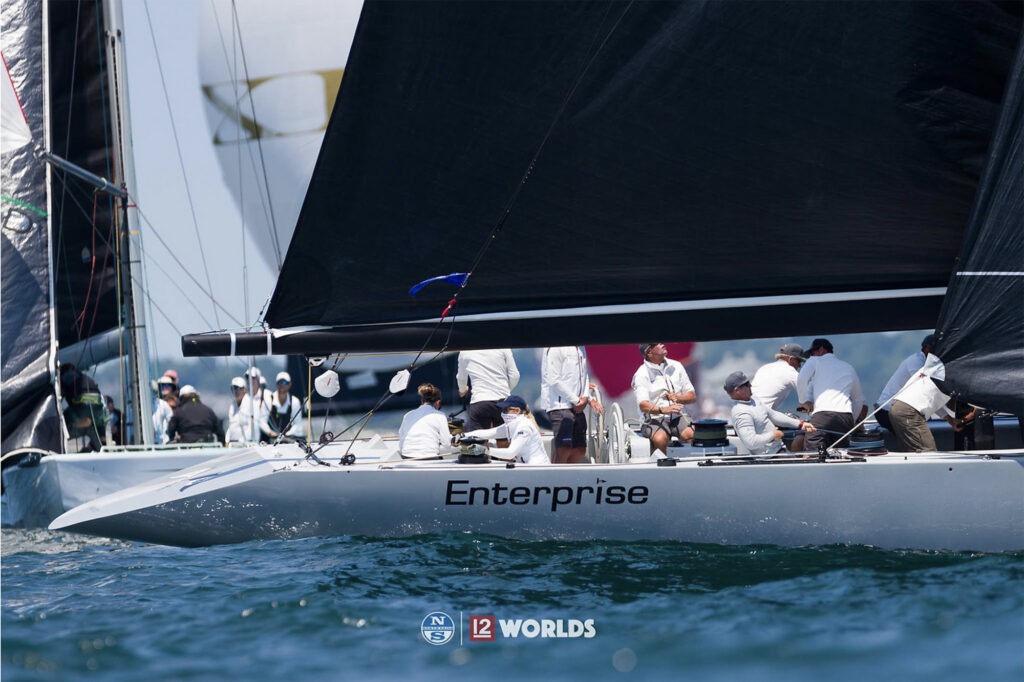
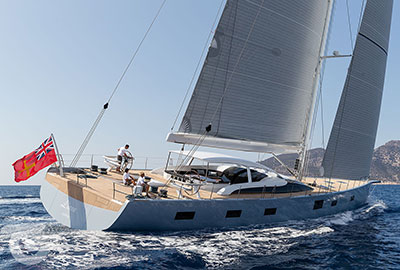
Cape Horn Engineering’s methodologies have been developed and rigorously tested in a highly competitive environment, where the slimmest of margins can make the difference between winning and losing a race. Besides America’s Cup, VOR70 and Open60 we have helped design winning yachts for ORC, IRC, Superyacht class, 12 and 6mR, Olympic classes including Formula Kite hydrofoils, TP52s, Mini Maxis, classic yachts, production boats, the list is endless.
Case Studies
See our case studies on Yacht Racing
Simulations
Our simulations on Ship Design Optimisation
Following an R&D collaboration between the companies Cape Horn Engineering, SumToZero, SailGP Technologies and Navasto, we are proud to present preliminary results of a Machine Learning Model for Real Time CFD Prediction.
In 2018 Cape Horn Engineering was proudly commissioned once again to assist in the design of the new foil system for HUGO BOSS. The CFD approach involved setting up 4 and 5 ‘degrees-of-freedom’ simulations, where the fully appended yacht is free to move in space and the aerodynamic and hydrodynamic forces are mostly balanced and the yacht finds its floating – or semi flying attitude – during the simulation.
After our successful involvement in the design of the foils of HUGO BOSS, we were delighted to be commissioned again to assist with CFD analysis to refine the design of the enclosed cockpit.
The complex behaviour of the sailing yacht in reaching waves with forward speed is studied, with all the 6 DoF released during the unsteady RANS simulation. The two different hulls show non-linear response to the wave caused by a slight difference in hull form.
Cape Horn Engineering have developed a RANS calculation to simulate the viscous flow over the rigid sails, mast, boom, hull, and any other required elements (crew, stacked sails, …). We star the simulation with an IGES file as input, computation time of under an hour, viscous effects taken into account, detailed PDF reporting, with sail pressures delivered in SailPack and Membrain format.
For AC35, Cape Horn Engineering conducted thousands of CFD simulations to optimise the foiling catamaran’s aero package, improving aerodynamic performance and VMG under representative upwind and downwind sailing conditions.
CFD analyses for the 35th America’s Cup examined daggerboard performance, flight control, cavitation, ventilation, and flow dynamics using 2D/3D simulations and LES.
This set of movies shows some of the simulations performed during the 34th America’s Cup (San Francisco, rigid wing 72 foot catamarans) for Team Artemis Racing.
Benefits of using our specialist marine expertise
Cape Horn Engineering ́s methodologies have been developed and rigorously tested in a highly competitive environment, where the slimmest of margins can make the difference between winning and losing a race. Besides America’s Cup, VOR70 and Open60 we have helped design winning yachts for ORC, IRC, Superyacht class, 12 and 6mR, Olympic classes including Formula Kite hydrofoils, TP52s, Mini Maxis, classic yachts, production boats, the list is endless.
Our Sail Design Service

Our online CFD computations are for sail makers, naval architects and yacht designers.
State of the art aerodynamic technology and high fidelity simulations to optimise your sail design and increase sailing performance.
We will analyse and evaluate the performance of your sails (and the boat), from a single sail design to multiple geometries, weather conditions and racecourse conditions. Accurate results of the best possible sail geometry plus an efficient visualisation of the sail loads will be available in just a matter of hours.