CFD Hydrodynamic Analysis – Windy SR 77
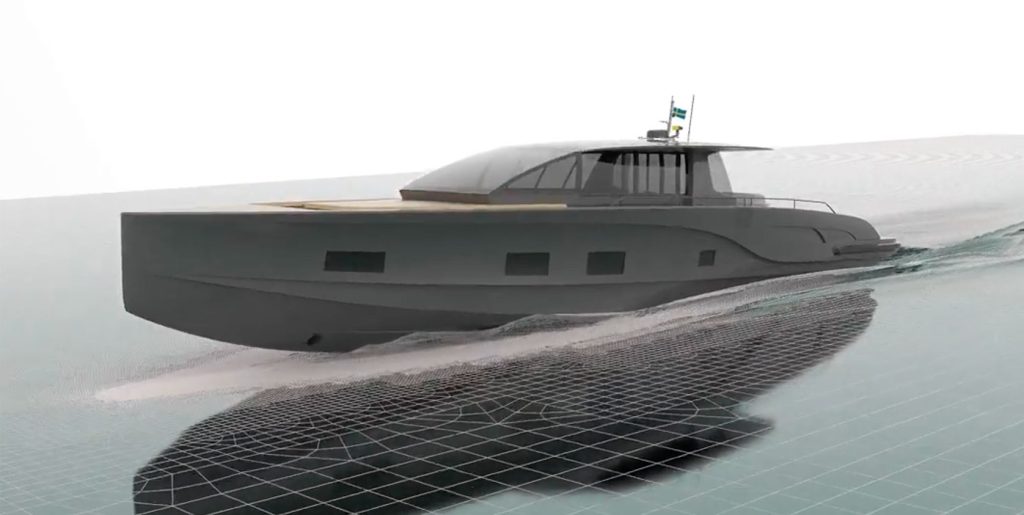
Cape Horn Engineering are proud to continue the collaboration with international yacht designer, Malcolm McKeon for this flagship vessel, SR 77 for Windy Scandinavia AB.
Cape Horn Engineering proudly carried out an extensive hydrodynamic analysis to evaluate performance, seakeeping, manoeuvrability, and stabilisation across a wide range of operating conditions. An important step in the development of the largest and most advanced Windy ever built.
The high performance hull was analysed in two loading conditions and across multiple appendage configurations. Calm water performance was assessed over a speed range of 20 to 50 knots, followed by a seakeeping analysis across a wide range of wave directions, heights and periods, and finally the vessel’s manoeuvring characteristics were analysed through turning circle manoeuvres.
A key focus of the study was assessing the effectiveness of Sleipner stabiliser fins in improving roll stability, controlling heel angle, and quantifying the risk of fin wake ingestion into the waterjets.
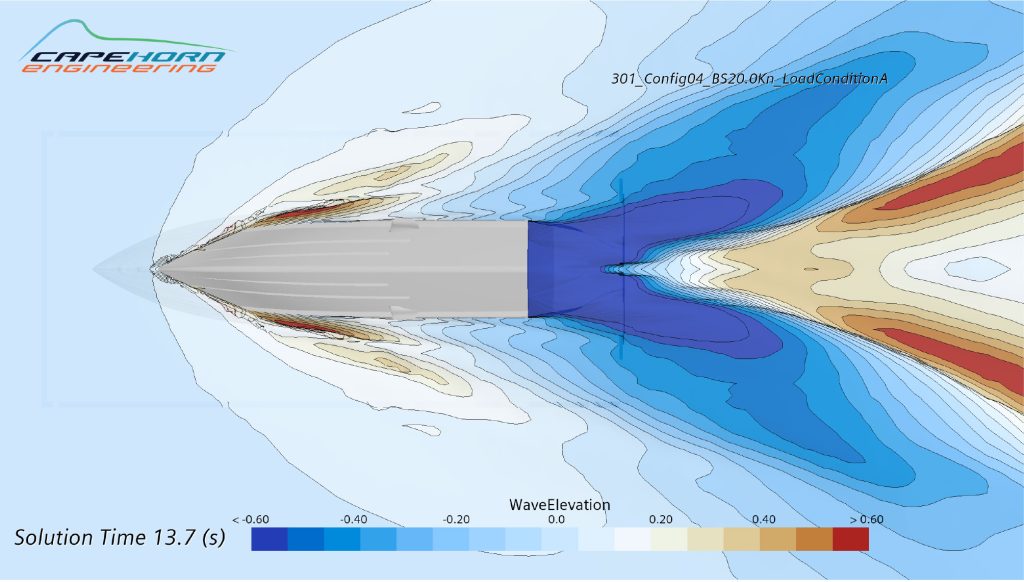
High fidelity, RANSE based CFD was used to calculate the hydrodynamic forces, moments, and motions of the vessel at full scale, accounting for free surface deformation and viscosity. The CFD simulations were processed on a High Performance Computing (HPC) cluster using the best-in-class software package Simcenter STAR-CCM+ from Siemens Digital Industries Software.
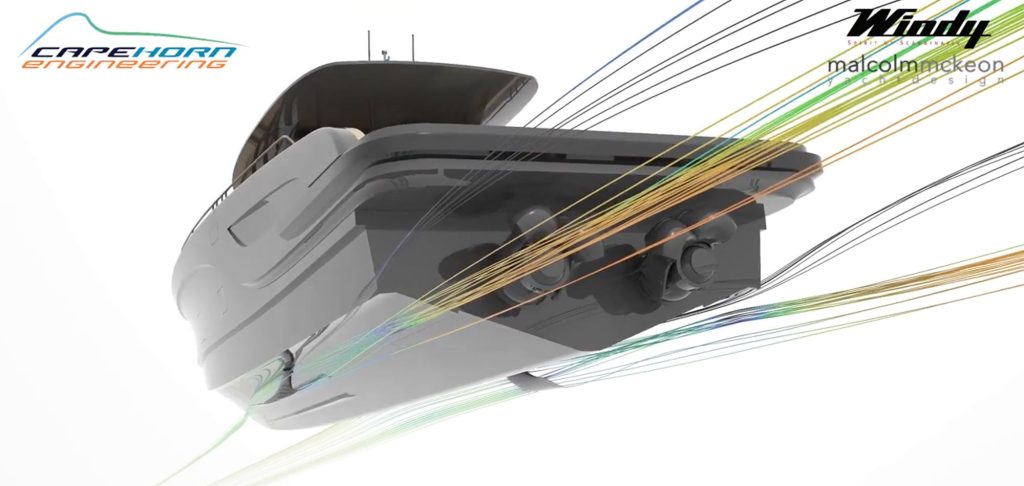
The Windy SR 77 design project follows our collaboration in the successful design of their powerful 60ft superyacht chase-boat, Windy SLR 60.
Cape Horn Engineering’s long-standing collaboration with Malcolm McKeon has provided an unparalleled synergy to the design process of each yacht. Since 2016, we have built up a trusted relationship, collaborating on CFD investigations for six superyachts to ensure the highest degree of performance, comfort, stability and safety.
See the Windy SLR 60 case study.